Brittle Plastic Disease
Brittle Plastic Disease ("BPD") is a condition in which plastic components in vintage products become extremely brittle, resulting in the plastic fracturing under even very small amounts of stress. This page will focus on its appearance in the retrocomputing scene, but the problem can affect any older plastic products.
What types of plastic are affected?
Brittle Plastic Disease mainly affects ABS (acrylonitrile butadiene styrene) plastics, which are the most common type used on computer cases. Other types of plastic, like polycarbonates, can also become brittle with age. Many ABS plastics are actually a blend of ABS and PC plastics (you will often see them marked as "ABS-PC"), and these are just as affected by BPD as regular ABS. You will also often see plastic parts labelled "ABS-FR", meaning fire retardant (usually a form of brominated fire retardant). These are also just as affected.
Notable Examples
Vintage Macintosh Computers
Most Macintosh computers from the 1990s are affected by BPD. Early Macintoshes, up until around 1992, are not affected (at least not to as great of an extent). The first Mac to be a real nasty offender is probably the Quadra 800, which released in 1993. Other infamously brittle Macs include the LC 500 Series all-in-ones, 5000 Series all-in-ones, any Mac with a derivative of the Quadra 800 case, and the display bezel of the slot-loading iMac G3.
Vintage Laptop Computers
Vintage laptops may be the category of products that are the worst affected by BPD out of anything else. This is because unlike desktops, which will more or less remain intact as long as they're left alone on a desk, laptops all have display hinges which by their nature, put stress on the plastics when used. Because of this, a vast majority of laptop models from the 1990s will form stress cracks around the display hinges during use, eventually crumbling into pieces.
BPD seems to be pretty much universal on any laptop that was manufactured in Taiwan during the 1990s. Many Taiwanese laptops from the early 2000s are also now affected. Laptops manufactured in other countries can vary. Some of the Japanese stuff is holding up a little better, but other Japanese plastics can be just as bad as Taiwanese plastics (NEC is a great example of this). The general build quality of a laptop can also influence the perception of its plastic quality, as a laptop built more solidly will be less likely to develop cracks near the hinges than a laptop which was a little bit flimsy from the get-go.
Laptops like IBM's ThinkPad line are a good example of this. People generally perceive their plastics to have held up better than their competition, but I don't think this is particularly true. IBM often used stronger carbon fibre-reinforced plastics on the display lids (or sometimes even metal), alongside building very durable designs which are a lot more resiliant to brittle plastic. If you pay close attention, you'll find that IBM's regular old ABS plastic is usually just as brittle as other laptops. The ThinkPad 700 and 720 are great examples of this, alongside other small parts like the ThinkPad 600's display bezel.
How long does it take for plastics to become brittle?
This will vary, depending on the type of plastic, its chemical formulation, what conditions it was stored in, and a number of other factors. From what I've seen while working on hundreds of different vintage laptop computers, affected plastic usually starts becoming noticably brittle after around 20 years. By 25 years, it starts getting pretty bad, and by 30 years, it starts to reach crumbler territory.
I must again stress that this will greatly vary product to product. I've run into some 90s ABS which feels just as flexible as the day it came out of the factory.
What causes ABS plastic to become brittle?
The root cause behind BPD is a question that will yield you many different answers if you ask it. This is because plastics material science is very complicated, and there are a number of different factors which can compromise a plastic's structural integrity. Since plastic formulations across different products will be slightly different from one another, what causes one plastic to become brittle may also be different from what causes another plastic to become brittle.
Please note that I am not a material scientist and am not an expert in plastics. What I've written below is what I've learned from other people who know more about this than I do. It's possible that I may be slightly incorrect, or may be missing other details or factors which contribute to plastics becoming brittle.
The most likely and frequent cause of BPD is the off-gassing of compounds from the plastic over time, often brominated fire retardents (BFRs) and/or plasticizers. This can happen due to excessive exposure to heat, ultraviolet light, or often just chemical instability. As these chemicals off-gas, they build up pressure in the plastics, which causes microscopic fractures which compromise their structural integrity. Additionally, if the chemicals leeching out are plasticizers (chemicals which make plastic more flexible), the loss of the chemicals itself will make the plastic more brittle.
Visualizing the Problem
Below are some images taken by Blaise Mibeck from Cubic Labs in collaboration with YouTuber polymatt. They show ABS plastic samples from a Chaplet Halikan LA-30A laptop computer which had crumbled into pieces during shipping placed under an electron microscope, allowing us to see exactly what is going on with them.
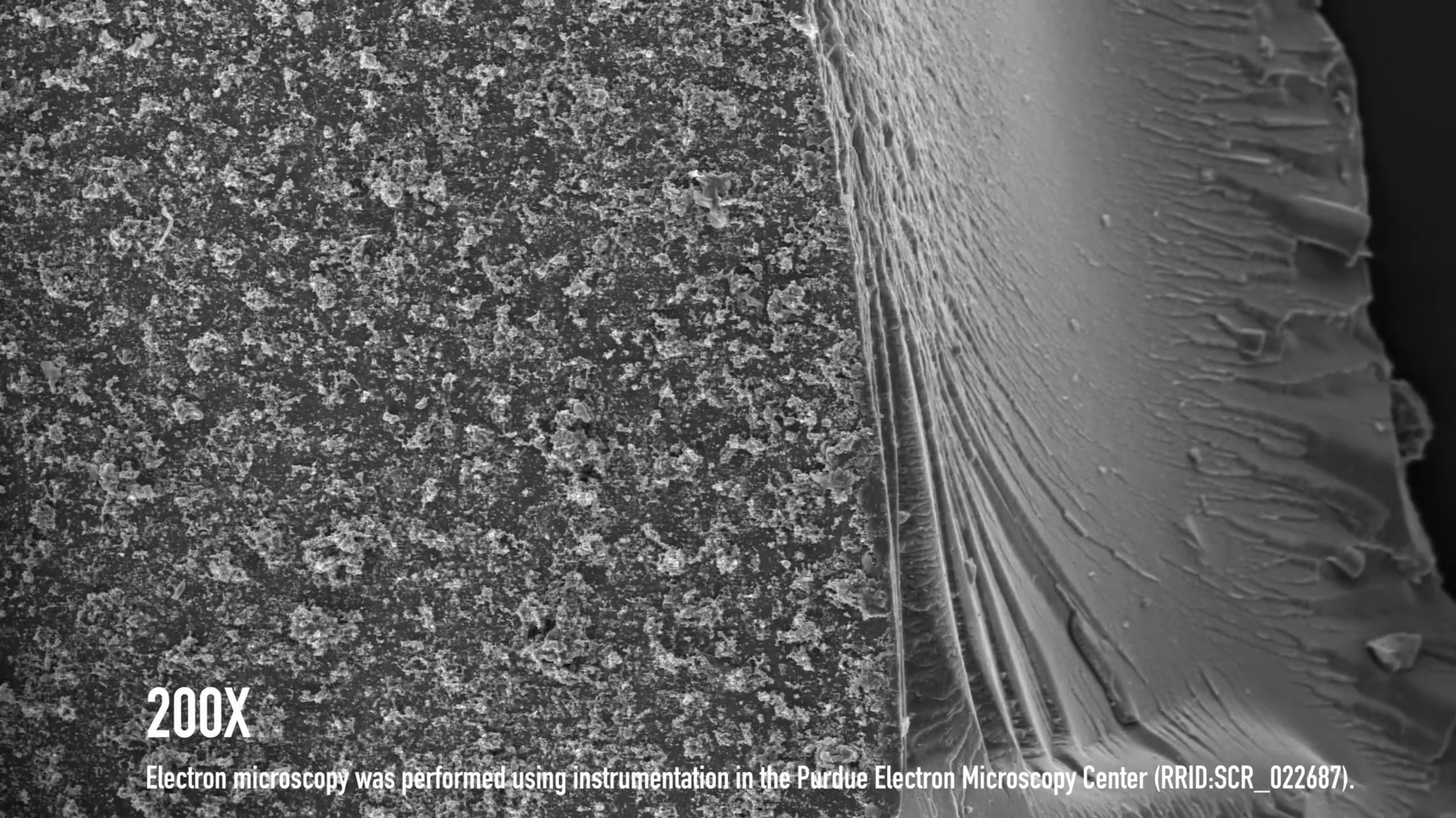
This image shows a view at 200X magnification. It depicts the shear edge where the plastic cracked.
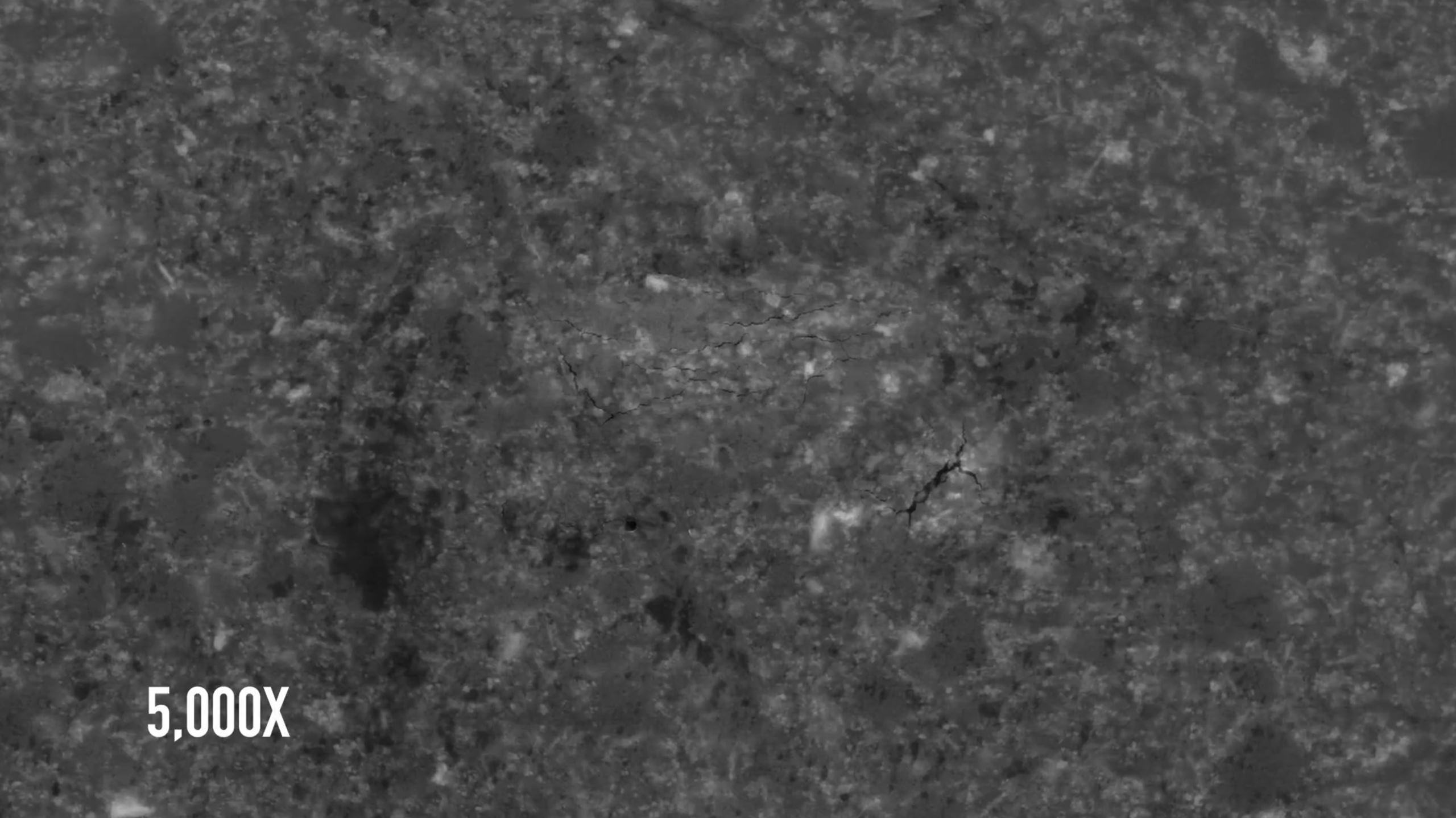
Zooming in further, we can see the first signs of trouble. Notice the micro-fractures near the center of the image.
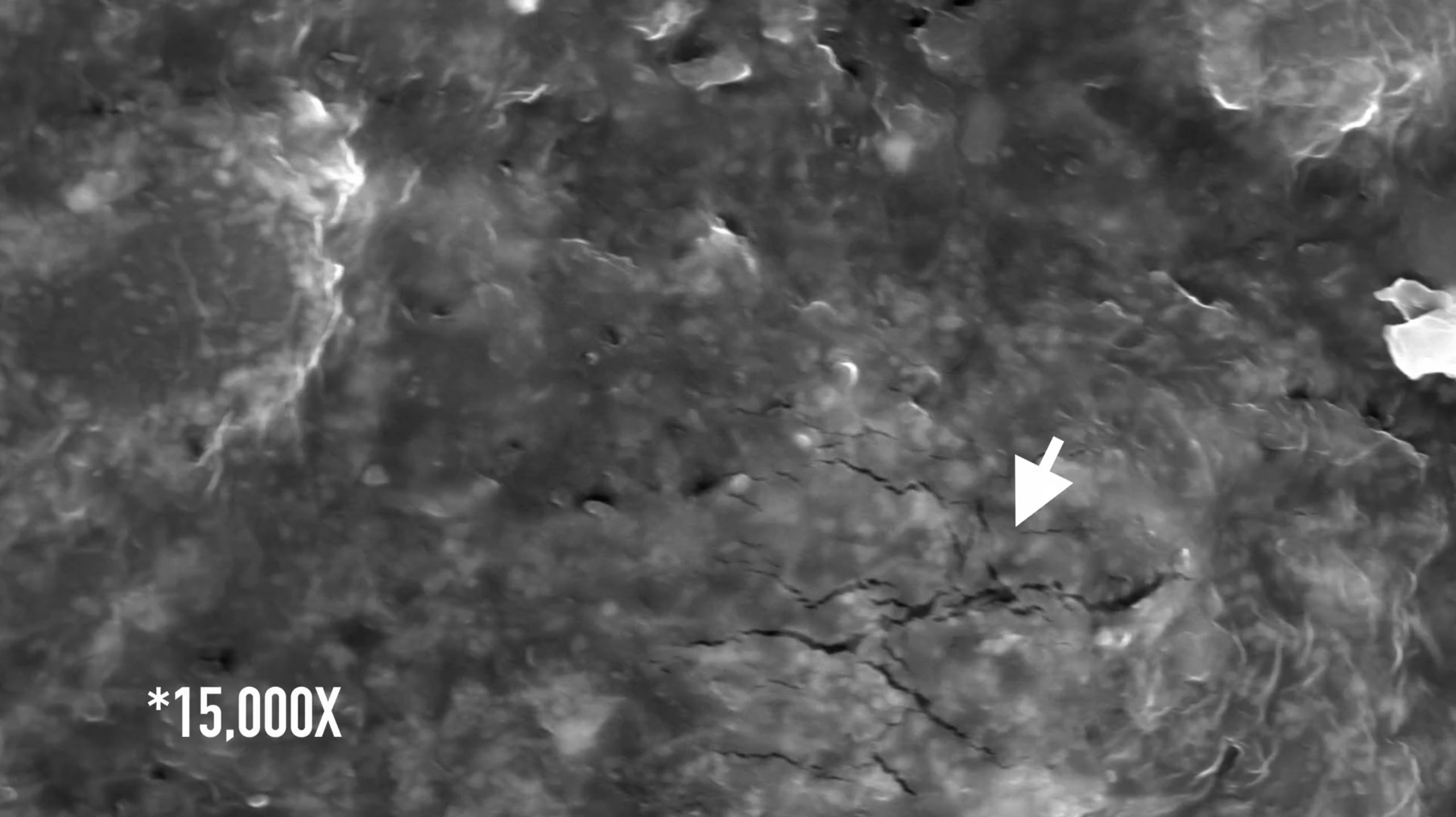
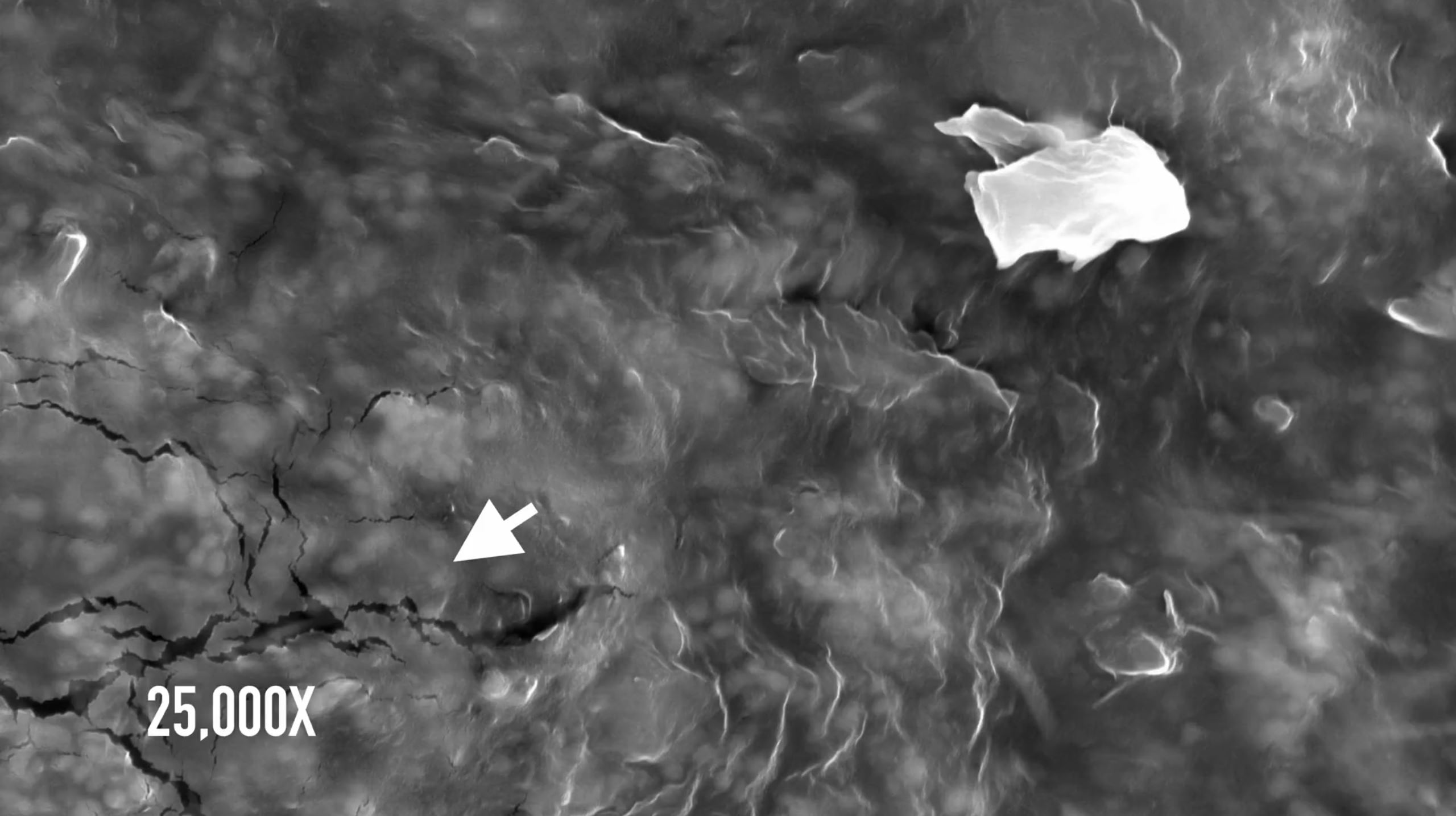
Zooming in even further, it becomes more obvious.
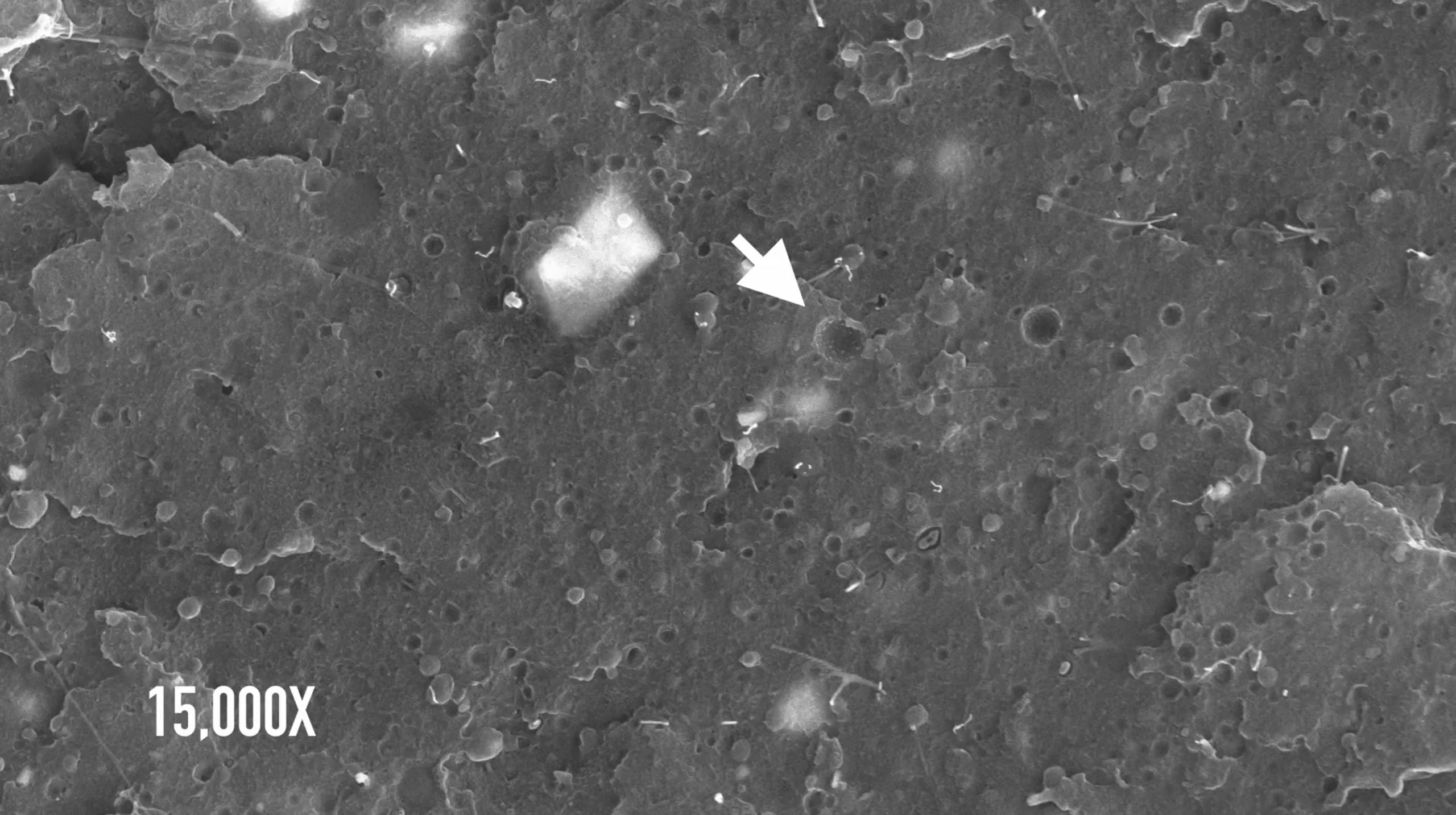
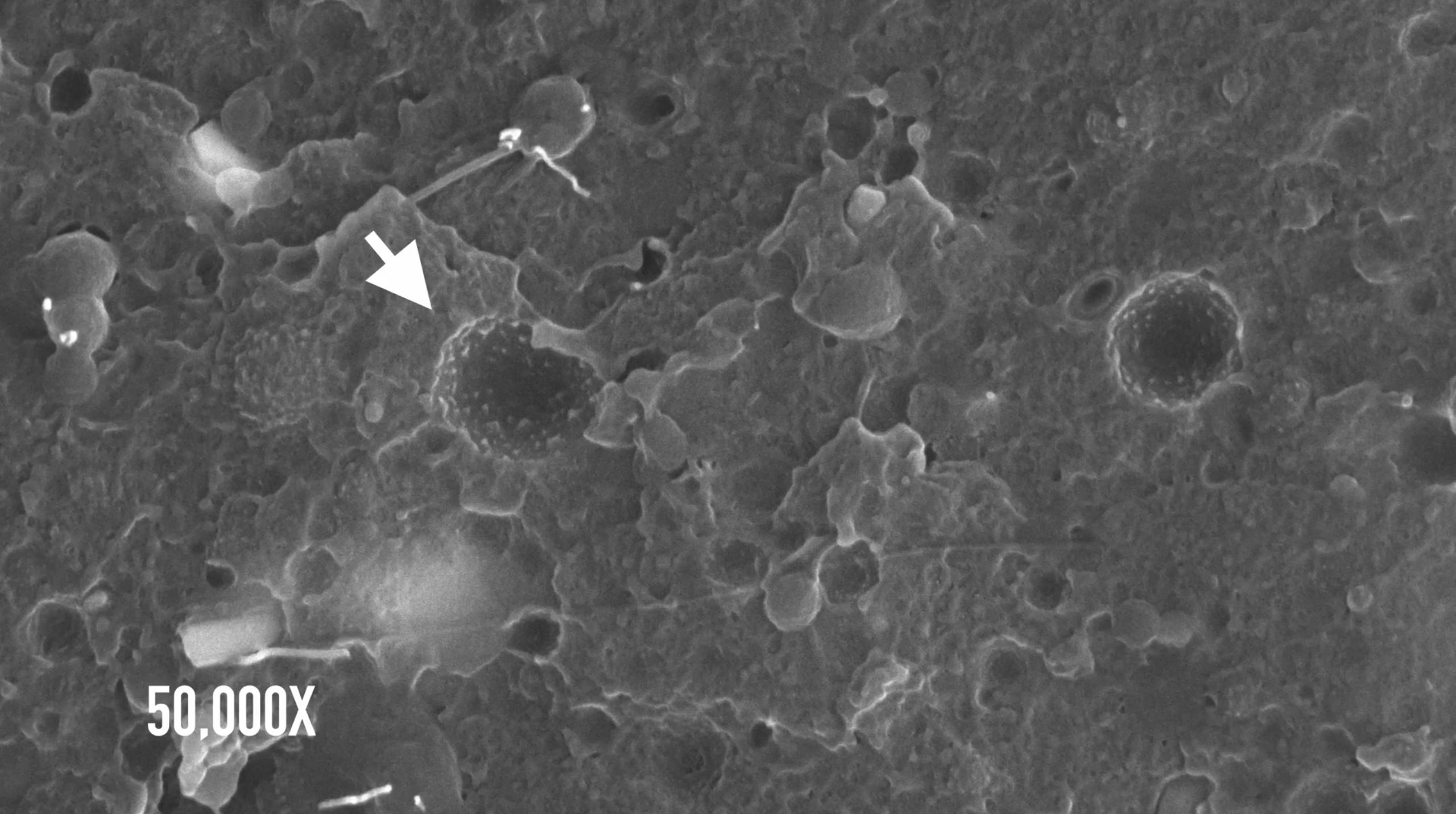
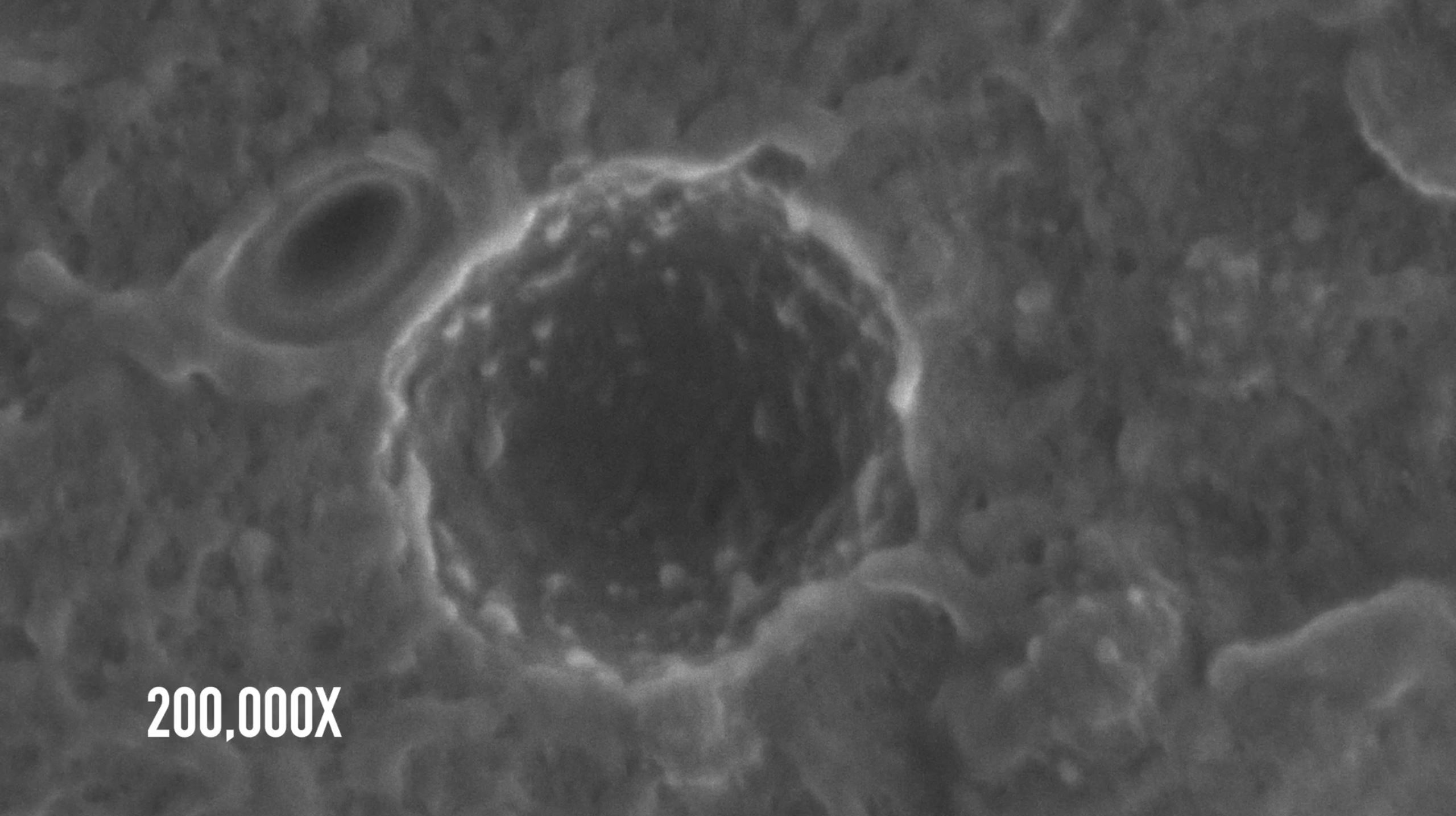
In a different area of the plastic, you can see these microscopic "craters" in the plastic. Chemical analysis around these areas showed a concentration of bromine, indicating that in this case, the craters were likely caused by the BFR off-gassing out of the plastic over time. Analysis comparing this sample to a less brittle sample of plastic from the Halikan showed that the less brittle sample had significantly more bromine in it than the brittle sample. This creates a correlation between BFR off-gassing and higher brittleness.
Conclusions
In the case of the Halikan, it seems BFRs are the likely culprit of the brittleness. Still, this doesn't speak for all plastics. Manufacturers constantly change formulations in order to try to create better plastics with different properties, and these will all age differently.
Do storage conditions play a role?
It is commonly cited that plastics stored in worse conditions (such as hot and humid climates, or being constantly exposed to UV light) will cause them to deteriorate more than those stored in good conditions. This is likely true, and should play a role in plastic degredation. That being said, from all the anecdotal experience I have heard and experienced, this only remains relevant to a certain point. It seems that if a certain computer's plastics can go brittle, they eventually all will once enough time has passed. Poor storage conditions can certainly accelerate deterioration, but good storage conditions cannot prevent it. If this was the case, there should be some people with non-brittle Performa 5200s, and I certainly have seen no such thing!
In one case, I have owned six separate examples of the same vintage laptop from 1994/95 which always goes brittle. The one with the appearance of being stored the best was just as brittle as the one appearing to have been stored the worst. In cases where I have seen variance across different examples of the same laptop, that variance has been between "crumbles to the slightest stress" and "slightly better but still very brittle", rather than being brittle vs. not brittle.
Mitigations
There are currently no proven methods of "repairing" brittle plastic to make it flexible again. Even if there was a proven method of adding flexibility back to plastics, the electron microscope imagery of the Halikan shows us that the plastic will remain compromised no matter what, due to the micro-fractures.
As such, the best way forward is likely to do as polymatt does - design and 3D print replacements for brittle parts. This is very difficult and careful work, but will get easier as technology improves.
Of course, there is also always the option of repairing cracks and then being extremely careful to avoid damaging them further. The most important thing to note about this approach is that you have to account for parts that will be under strain when making repairs. For example, if you are fixing a cracked housing near a laptop hinge, you may be tempted to just carefully fill the crack with a superglue or epoxy, and then reassemble. This won't work well though, because while the bond you just made will be strong, the surrounding plastic will remain weak, and crack again somewhere else. In these cases, you need to add a lot of extra epoxy (or another method of reinforcement, like a mesh sheet) around the cracked areas to add structural support. Of course, this is a quite ugly fix, but is the only way to keep a cracked laptop's hinges functional.
Page last updated (MM/DD/YYYY): 11/09/2025
Update Reason: page created
Back-Navigation
Home < Repair Portal < Knowledge Base < Brittle Plastic Disease